

 Share
Share Description
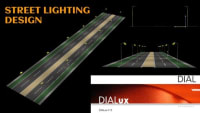
This course is a practical, engineering-focused training program designed to teach students how to design, analyze, and optimize outdoor road illumination systems using the DIALux 4 software platform. Proper street lighting is critical for public infrastructure, driver safety, and urban development, requiring strict compliance with photometric standards and energy regulations. This course provides a clear, step-by-step walkthrough of the specialized street lighting module in DIALux 4. Learners will discover how to configure road geometry, select LED outdoor luminaires, position pole arrangements, and perform accurate photometric calculations to ensure uniform light distribution and glare reduction across highways, urban streets, residential roads, and pedestrian pathways.
Topics Covered
- Outdoor & Roadway Lighting Standards: Understanding global street lighting classes (e.g., ME, CE, S classes), illuminance, luminance, longitudinal uniformity, and glare limits (TI percentage).
- DIALux 4 Interface & Street Module: Navigating the specialized street lighting wizard, establishing project settings, and managing calculation parameters.
- Road Profile & Geometry Configuration: Defining carriageway widths, lane counts, sidewalks, grass verges, median strips, and surface reflection properties (R-tables).
- Luminaire & Pole Arrangement Setup: Importing luminaire photometric files (IES/LDT), setting pole mounting heights, overhangs, boom angles, and tilt settings across single-side, staggered, or opposite pole configurations.
- Photometric Calculations & Optimization: Evaluating luminance levels, glare values, energy density, and pole spacing to meet international standards cost-effectively.
- Documentation & Report Submittals: Generating detailed calculation reports, false-color luxury diagrams, luminaire schedules, and documentation for municipal or client approvals.
Who Will Benefit From This Course
- Electrical Engineers & MEP Consultants: Looking to specialize in municipal infrastructure, highway engineering, and outdoor lighting design.
- Urban Planners & Civil Engineers: Seeking to understand roadway lighting principles and verify contractor proposals against safety standards.
- Lighting Designers & Technicians: Wanting to expand their software expertise into dedicated street and outdoor roadway lighting workflows.
- Municipal Infrastructure Managers: Responsible for overseeing city lighting upgrades, smart LED retrofits, and energy-efficiency compliance.
Why Take This Course
Road and street lighting design requires technical precision where guesswork can lead to dangerous visibility issues or costly energy waste. By taking this course, you will acquire job-ready technical skills in one of the most widely requested engineering software tools for public infrastructure projects. You will learn how to balance visibility, safety, and energy savings by choosing the optimal luminaire arrangements and pole spacing for any road profile. Whether you are aiming to advance your career in electrical consulting, win municipal infrastructure tenders, or gain hands-on software certification for public works projects, this course delivers the practical knowledge and software expertise required to engineer safe, code-compliant street lighting systems.