 Share
Share Description
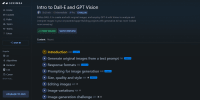
The field of Artificial Intelligence has evolved beyond text-based interaction, moving into a multi-modal era where machines can both see and create complex visual content. This course on Scrimba is a practical, forward-looking curriculum designed to teach web developers how to integrate these powerful visual capabilities into their applications. This course explores the two sides of AI vision: image generation using DALL-E 3 and visual comprehension using GPT-4 with Vision. Through Scrimba’s signature interactive screencasts, you will learn to build applications that can generate bespoke art, analyze uploaded photographs, and interpret visual data. By the end of this course, you will have transitioned from being a developer who works only with strings and numbers to one who can build truly "perceptive" software that understands and interacts with the visual world.
Topics This Course Covers
The curriculum provides a comprehensive breakdown of the OpenAI visual ecosystem, focusing on implementation through the API:
- The DALL-E 3 Ecosystem: Understanding the capabilities of OpenAI’s premier image generation model and how it differs from its predecessors.
- Image Generation Logic: Mastering the API calls required to generate high-resolution images from natural language descriptions.
- Advanced Prompting for Images: Learning how to refine prompts specifically for DALL-E to control style, composition, and detail.
- GPT Vision Fundamentals: Exploring the GPT-4 with Vision model and its ability to process image inputs alongside text.
- Visual Analysis and Tagging: Implementing logic to have the AI describe images, identify objects, and extract text from photos.
- Interpreting Charts and Diagrams: Using GPT Vision to analyze technical data visualizations and translate them into structured JSON or text.
- Real-World Multi-modal Workflows: Combining vision and generation to build complex apps, such as automated alt-text generators or visual search tools.
Who Will Be Benefitted Taking This Course
- Frontend and Fullstack Developers: Professionals who want to stay at the cutting edge of the "AI Engineering" trend by adding visual AI capabilities to their skill set.
- UI/UX Designers: Creative professionals interested in how AI can be used to automate asset generation or provide accessibility audits of existing designs.
- Software Architects: Tech leads looking to evaluate the feasibility of multi-modal AI for enterprise applications like automated inventory management or medical imaging analysis.
- Self-Taught Programmers: Learners who have mastered JavaScript basics and want to build a standout portfolio project that uses "State of the Art" AI.
- Product Innovators: Individuals looking to build niche AI apps that require the ability to "see" or "draw," such as interior design assistants or automated social media managers.
Why Take This Course
In a crowded job market, the ability to work with multi-modal AI is a major differentiator. While many developers have learned to call a basic text API, far fewer understand the complexities of handling image buffers, managing visual tokens, and crafting multi-modal prompts. Taking this course is a strategic move because it teaches you to build apps that solve problems text-only AI cannot—such as providing accessibility for the visually impaired or automating content moderation for images. Choosing the Scrimba platform for this subject is particularly effective because multi-modal development is inherently visual; being able to see the generated images and the AI's visual interpretation side-by-side with your code ensures a deep, intuitive understanding. This course provides you with the technical confidence to lead the next wave of AI integration, building applications that are more accessible, creative, and intelligent.