

 Share
Share Description
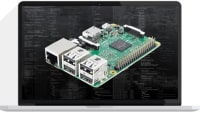
This course on Udemy is an immersive, hands-on training program designed to teach low-level firmware creation, hardware architecture, and ARM processor mechanics using the Raspberry Pi platform. As ARM architecture dominates modern mobile devices, embedded systems, and single-board computers, understanding its underlying execution model is vital for systems engineers. This course provides a complete, step-by-step introduction to writing, assembling, linking, and debugging ARM assembly code directly on a physical Raspberry Pi. By removing high-level code abstractions, the curriculum guides learners through processor registers, memory layout, data processing, and hardware peripheral control, establishing a strong foundation for bare-metal firmware development and hardware-level programming.
Topics This Course Covers
- ARM Architecture & Register Layout: Exploring the ARM processor model, including general-purpose registers, the Program Counter (PC), Link Register (LR), and Current Program Status Register (CPSR).
- Data Processing & Arithmetic Instructions: Implementing binary/hexadecimal arithmetic, bitwise logic operations, data movement, and barrel shifter features.
- Control Flow & Conditional Execution: Mastering branch instructions, condition flags, loops, and conditional execution features native to the ARM instruction set.
- Memory Operations & Load/Store Architecture: Managing memory access patterns, addressing modes, stack frames, and array structures using LDR and STR operations.
- Subroutines, Functions & AAPCS: Structuring modular assembly subroutines according to the ARM Architecture Procedure Call Standard (AAPCS) for parameter passing and return values.
- Assembling, Linking & Debugging: Toolchain navigation using GNU Assembler (GAS), GCC, and GDB on Raspberry Pi OS to inspect memory, register states, and hardware behavior step-by-step.
Who Will Benefit Taking This Course
- Embedded Systems Engineers & Firmware Developers who want to build performance-critical code, custom drivers, and bare-metal applications on ARM-based platforms.
- Computer Science Students & Educators looking for a practical, hardware-backed environment to study computer organization, CPU pipelines, and low-level execution models.
- Software Developers & C/C++ Programmers seeking to understand how compilers optimize code for ARM processors and how high-level code maps to machine instructions.
- Hardware Hobbyists & Raspberry Pi Enthusiasts interested in going beyond high-level Python or C code to control hardware directly at the assembly level.
Why Take This Course
With ARM processors powering billions of devices—from smartphones and microcontrollers to modern desktop chips—learning ARM assembly language is one of the most impactful skills for low-level systems engineering. Learning directly on a physical Raspberry Pi bridges the gap between abstract computer science theory and real-world hardware execution, allowing you to observe exactly how instructions interact with the physical CPU and system memory. Taking this course arms you with a comprehensive, low-level perspective on software development, providing the clarity needed to debug complex embedded systems, optimize performance-critical routines, and engineer robust bare-metal solutions.